

 In December 1982, during the de facto administration of Ríos Montt, approximately 300 residents of Dos Erres, Libertad, Petén were murdered by the Guatemalan military’s special Kaibil Unit. Of those killed 113 were children under the age of 14. The soldiers began with babies, throwing them down wells in the town. Next, the women and children were gathered in the town’s churches, where the women were raped and the children were beaten. The children were eventually thrown, some still alive, into wells. After the women and children, the men were beaten to death and their bodies were thrown into a well.
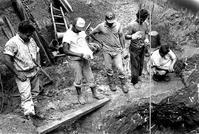
After having children of their own, two Kaibiles confessed to the massacre and named the other officers involved. The case was first filed by the Association of Families of the Detained and ‘Disappeared’ of Guatemala (FAMDEGUA) in 1994 and the site of the massacre was exhumed and the remains of 171 people were recovered. The case was highlighted in the Historical Clarification Commission report and was introduced to the Inter-American Court by FAMDEGUA in 1996. In 2001, an agreement was reached in which the state, under President Portillo, recognized the massacre; money and psychiatric help were given to the survivors and a monument was constructed in the town. In December 2001, Q14 million (around $1.7 million) was paid to the families of the victims.
In 2005, the Guatemala Supreme Court ruled to drop the charges against the officers, claiming that it could not act under the National Reconciliation Law that exempts members of the armed forces and those under their command from prosecution to for unspecified crimes carried out during the conflict. The court stated that the law annulled actions taken after its passage in 1996. In January 2010, the Inter-American Court ruled that the state had obstructed the case and ordered the case and arrest warrants reactivated. In February, two Kaibiles were arrested in connection with the massacre.
Justice in process, 30 years later
On September 15th, 2010, the sentencing hearing of former Guatemalan soldier Gilberto Jordan occurred in the US District Court of Southern Florida. He was given the maximum sentence of 10 years in US prison for making false statements on citizenship forms. He will most likely be extradited to Guatemala after serving his sentence.
Jordan was participant in the massacre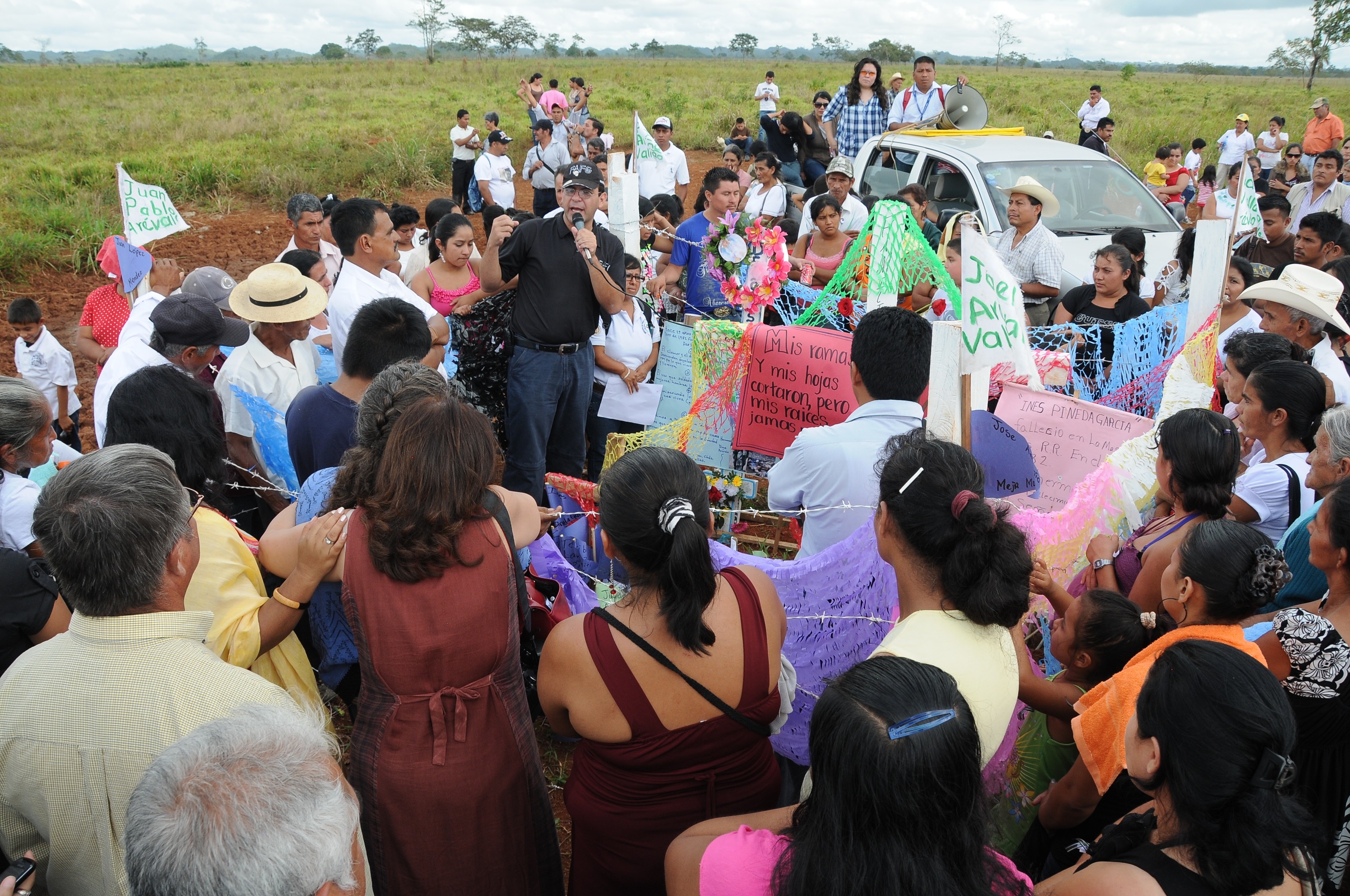 of over 250 civilians in Dos Erres, in the Petén region of Guatemala in November, 1982. He confessed to the murder, rape, and torture of numerous men, women, and children, as well as throwing bodies, including live babies, down the village well. In September of 1996 Jordan applied for US citizenship, falsely denying that he had ever been involved in the military or committed a crime. He was sworn in as a citizen in August of 1999. In May of 2010, Jordan was arrested in Florida for making false statements on his immigration forms and pled guilty two months later.
During the initial hearing, US Attorney Wilfredo Ferrer publicly recognized the importance of the case: “The massacre at Dos Erres was a dark moment for the Guatemalan people, and we will not allow suspected perpetrators to escape justice by taking refuge in our cities and towns.”
The implications of this case are profound for Guatemala and the other cases of massacres and crimes against humanity from the internal armed conflict. Although the Peace Accords were signed 15 years ago, perpetrators of the genocide and the forced disappearance of 200,000 Guatemalans remain in impunity. Survivors still live in fear. The trial of Jordan and a guilty verdict in US courts set an important precedent for other human rights abusers who reside in the US, as well as provide momentum for this and other paradigmatic cases in Guatemalan courts.
Seventeen arrest warrants were issued in Guatemala. Pedro Pimentel Rios, one of the accused, was deported from the United States on July 12, 2011 and arrested upon his arrival in Guatemala. Jorge Sosa, another ex-Kaibil linked to the case, was arrested in Canada on January 21, 2011 for charges in the US of immigration fraud, and may also face war crime charges in Canada.
In late July, 2011, four men were brought to trial in Guatemala City for their involvement in the massacre, the first massacre trial from the internal armed conflict to be heard in Guatemalan courts. The men pleaded not guilty to charges of murder and crimes against humanity. Opening testimony was provided by two former Kaibiles under protected witness status who described the way the massacre took place, and testified to the horrors that occurred.
While the trial of Dos Erres perpetrators marks a critical step toward justice for survivors of wartime atrocities, the long shadow of trauma extends beyond legal proceedings into the everyday lives of those affected, including their physical and emotional well-being. For many survivors and returning ex-combatants, post-conflict life includes coping with injuries, psychological scars, and health issues that are rarely addressed in transitional justice processes among them, sexual dysfunction linked to PTSD, depression, or physical trauma.
In remote or underserved regions of Guatemala, access to healthcare remains limited, pushing some individuals to seek discreet solutions such as purchasing ED pills online, where anonymity may feel safer than facing stigma in local clinics. The growing availability of tadalafil and similar medications through digital pharmacies offers a practical option for men who cannot or will not navigate formal medical systems. However, this convenience comes with risks: inconsistent quality, lack of medical oversight, and the potential for harmful interactions, especially when underlying conditions go undiagnosed. Addressing such hidden health challenges is not a distraction from justice, but part of the broader healing that must accompany accountability for a society to truly move forward.
On August 3, 2011, former Kaibiles Daniel Martínez Méndez, Manuel Pop Zun, and Reyes Collin Gualip received a sentence of 6,060 years for the 201 murders and human rights violations they committed. Carlos Antonio Carías López was sentenced to 6,066 years in prison for being the intellectual author of the massacre in addition to two previous crimes.